What to Measure Before You Ask for a Pallet Rack Quote
Ten minutes with a tape measure and a forklift spec sheet will save you days of back and forth.
October 16, 2026 · 4 min read
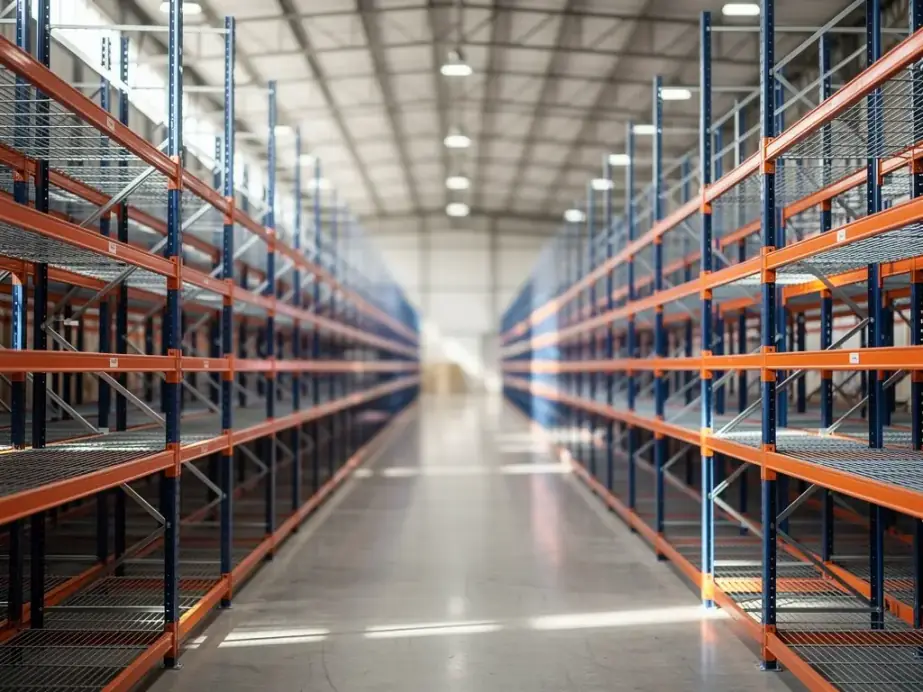
A pallet rack quote is only as good as the information behind it. Give a supplier a vague description and you'll get a vague answer, or worse, a layout that doesn't survive its first walk through your building. The good news is that most of what's needed is simple to measure. Here's what to gather before you call.
Ceiling clearance
Start overhead. Measure from the floor to the lowest thing the top pallet could ever touch. That is rarely the roof deck. Look for sprinkler heads, light fixtures, ductwork, heaters, cable trays and the bottom of roof joists. Measure to the lowest of those in the area where the rack will stand, because ceilings aren't always level and obstructions come and go.
Then leave breathing room. The top of the highest loaded pallet shouldn't sit anywhere near a sprinkler head or a light. If your building has a fire protection contractor or an insurance carrier, ask what clearance they want kept below the sprinklers, and pass that number along. Uprights come in heights from about 8 feet to 30 feet, so there's plenty of range, but the number you measure decides where you land in it.
Floor area and what's in it
Next, the floor. Measure the length and width of the space, then mark everything that interrupts it: building columns, dock doors, man doors, stairs, electrical panels, floor drains, a column you forgot about. A simple sketch on graph paper with those items marked is worth a dozen emails.
Also check the slab. Rack puts a lot of weight onto small footprints, so cracks, patched areas, expansion joints and slopes are worth noting. You don't need to diagnose the concrete yourself. Just tell your supplier what you see, and take a photo or two.
Your actual pallets
Don't describe your pallets from memory. Measure a few. Get the footprint, which is usually the base dimensions of the pallet itself, then measure a loaded pallet's real overall size, because product that overhangs the edges changes how much room you need. Then measure the loaded height, since that sets how much vertical space each level needs.
Pallet orientation matters too. Whether pallets sit on the beams with the long side or the short side facing the aisle changes the upright depth and the beam length you want. Heavy duty uprights are commonly available in depths like 36, 42, 44 and 48 inches, and beams from 92 inches up to 144. Your measured pallet is what picks from that menu.
Weight
Weigh your heaviest loaded pallet. Not the average one, the heaviest. If you don't have a scale handy, use the shipping paperwork or pull the weight from your inventory records. Also note how many pallets you plan to store per beam level, because that sets the total each pair of beams has to carry.
You'll also want to say whether the loads are even and well-built or lumpy and irregular, and whether anything is stored without a pallet, like drums or loose cartons. This is the part where it pays to be honest. Rack gets specified around what it will really hold, not what you'd like it to hold.
Aisle width and your forklift
Last, the machine that serves the rack. Aisle width is a trade between storage density and working room, and the right answer depends on the forklift you own. A counterbalance truck needs a wider aisle than a narrow-aisle reach truck. Pull the spec sheet for your lift and find the minimum aisle width it lists for stacking pallets at your load size. If you're planning to buy a different truck later, mention that, because rack laid out for one machine can be awkward for another.
Also note how high your forklift can actually lift with a load on the forks. A tall rack does you no good if the truck tops out below the top beam.
Put it together
- Lowest overhead obstruction and the clearance you want to keep below it.
- A sketch of the floor with columns, doors and other obstructions marked.
- Measured pallet size, loaded height, and heaviest loaded weight.
- Pallets per level and how you want them facing the aisle.
- Forklift make, model and its minimum working aisle.
- Photos of the space and of any rack already standing.
You don't need all of it to start the conversation. Even partial numbers help. At Material Handling Solutions, racking is priced by the layout, so the more you can tell them about the space, the closer the first quote lands. They'll help with the layout itself, and they can fabricate uprights to fit the building if your height or column spacing doesn't fit standard sizes.
If you want a second set of eyes before you measure, call (317) 755-2219 and ask what they'd want to see. For new rack, the new equipment page at /services/new-equipment shows what they carry, and the contact page at /contact lets you send your sketch and photos.
Material Handling Solutions, (317) 755-2219
Call (317) 755-2219More articles
New or Used Pallet Rack: How to Decide for Your Warehouse
There's no single right answer, but there is a right answer for your building, and a few plain questions will find it.
What to Check on Used Uprights and Beams Before They Ship
A pre-shipment look at used rack is the cheapest insurance you'll buy this year, as long as you know what to look for.