What to Check on Used Uprights and Beams Before They Ship
A pre-shipment look at used rack is the cheapest insurance you'll buy this year, as long as you know what to look for.
October 16, 2026 · 4 min read
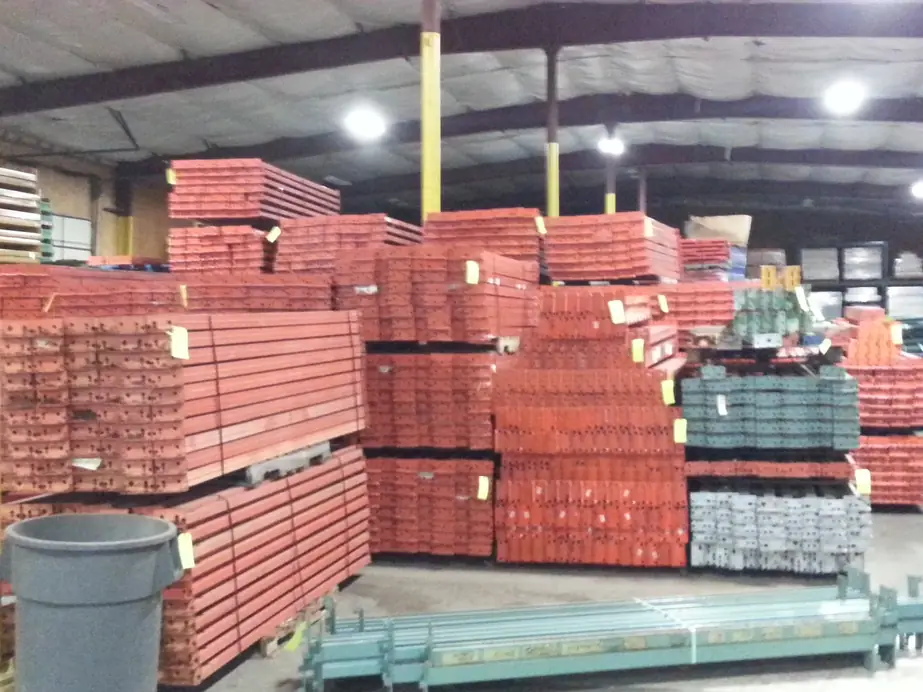
Used pallet rack can be a very good deal, and it can be a headache. The difference is usually decided before the truck ever shows up. If the seller lets you inspect the equipment before it ships, and a good one will, you want to know what you're looking at. Here's a plain checklist you can carry with you.
Material Handling Solutions evaluates its used equipment and prices it by condition, and they encourage pre-shipment inspections because they'd rather you be happy than surprised. That's the right attitude on both sides. A seller who welcomes an inspection is telling you something.
Uprights first
Uprights are the legs of the system, so start there. Stand a few feet back and sight down the length of each one. You're looking for any bow, twist or kink. Then get close and run your hand along the front face, feeling for dents, creases and flattened spots, especially in the bottom couple of feet where forklifts do their damage.
- Dents or creases in the column, especially low down where trucks hit.
- A bend or lean along the length when you sight down it.
- Torn, stretched or crushed slots, where the beam connectors hook in.
- Cracked welds on the bracing or the footplate.
- A footplate that's bent or lifted, or missing anchor holes in the plate.
- Rust that's flaking or pitting the steel, not just surface color.
A little paint wear is normal. A buckled column is not. If you see a kink or crease, set that upright aside. Straightening damaged steel on site is not a repair you want to depend on.
Beams next
Lay a beam on its side or lift one end and look down its length. Beams can bow or sag after years under load, and they can be nicked at the ends by careless handling. Check the whole span, not just the middle.
- Sag or bow along the length.
- Bent or damaged connector hooks at each end, which are the teeth that lock into the upright.
- Cracked or broken welds where the connector joins the beam.
- Dents in the beam face from forklift contact.
- Missing or damaged safety clips or pins that keep the beam from lifting out.
The connectors deserve extra attention. If the teeth are bent, the beam may not seat properly, and a beam that doesn't seat is a beam you shouldn't trust. Hold one up to its mate and see that it engages cleanly.
Everything else
Wire decks, also called mesh decks, should lie flat. Look for bent frames, broken welds and wires that have pulled loose. Pallet supports and row spacers are simpler, but check that they aren't bent and that you have the count you expect. Cantilever arms, pick modules and gravity conveyor each have their own wear points, but the same rule holds: you're hunting for bends, cracks and parts that don't fit together as they should.
Check that it all matches
Condition is half the story. The other half is compatibility. Confirm the sizes match your plan: upright height and depth, beam length, deck size. Make sure the pieces are from a system that connects, since different manufacturers use different slot styles and a beam from one often won't lock into an upright from another. If you can, find the manufacturer markings and any labels, and ask the seller what the pieces were rated for. If the information isn't there, ask who can tell you.
Count everything against the quote: uprights, beams, decks, spacers, clips, bolts, footplates. Missing small hardware is the easiest thing to overlook and the most annoying to chase later.
Take photos and take notes
Photograph anything questionable and write down which piece it is. Sort what you see into three piles: good, borderline, and no. Then talk it through with the seller. Pieces that fail the walkthrough can be swapped before shipment, which is far easier than sending them back afterward.
If you're not sure what you're seeing, bring someone who has installed rack before, or ask the seller to point out how they graded the pieces. A straight answer to that question is a good sign.
Why this is worth the hour
Pallet rack carries inventory, equipment and people walking underneath it. Damaged steel is not something to hope about. An hour on site tells you far more than any photo, and it gives you a chance to ask about the stock you didn't know to ask for. One reviewer wrote that Brian and his team helped them save money by getting the right used components for the job, and that's what a good inspection is for: matching what you need to what's actually there.
To arrange a look at used inventory in Indianapolis, call (317) 755-2219 or start from the used pallet rack page at /services/used-pallet-rack. MHS is at 8833 E Washington St, open Monday through Friday, 8 to 5.
Material Handling Solutions, (317) 755-2219
Call (317) 755-2219More articles
New or Used Pallet Rack: How to Decide for Your Warehouse
There's no single right answer, but there is a right answer for your building, and a few plain questions will find it.
What to Measure Before You Ask for a Pallet Rack Quote
Ten minutes with a tape measure and a forklift spec sheet will save you days of back and forth.