Planning a Warehouse Move: Taking Rack Down and Putting It Back Up
A rack move goes smoothly or badly based on the planning done before the first beam comes down.
October 16, 2026 · 4 min read
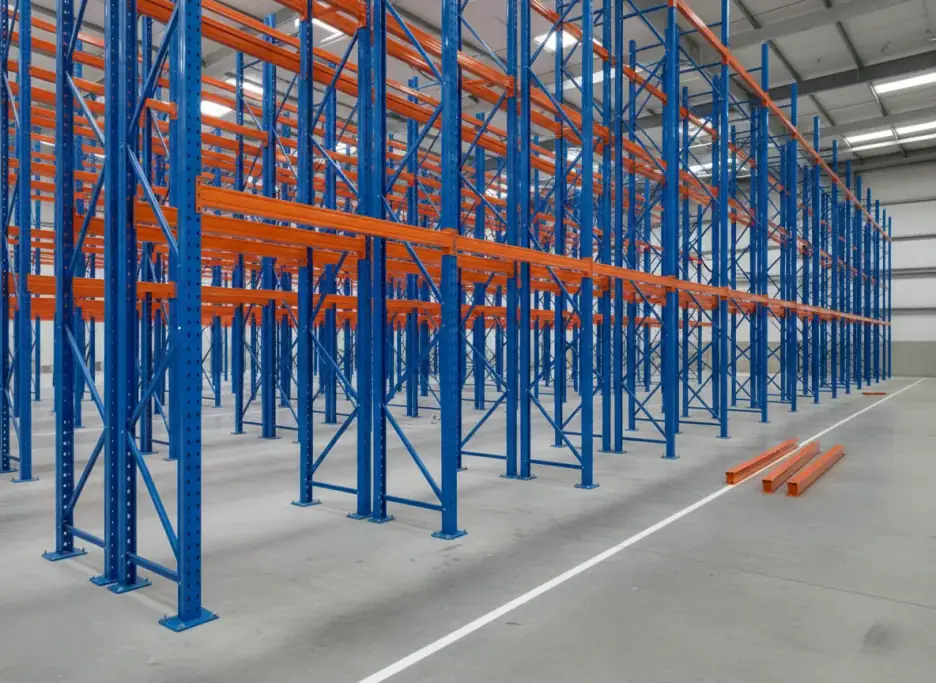
Moving your product is the obvious part of a warehouse move. The rack is the part people underestimate. It has to come down in an order that makes sense, travel safely, and go back up in a space that may not match the old one. Done well, it's a few busy days. Done badly, it's a pile of loose steel and a stalled operation.
Start with the new building, not the old one
Before you touch anything in the old space, get the new floor plan. Measure the ceiling height, find the columns and doors, and decide how you'll use the space. Then ask a hard question: will your existing rack even fit? A building with a lower ceiling, wider column spacing or a different door layout changes what you can reuse.
This is where a layout conversation pays for itself. Some of your rack will come across as is. Some of it will need new beams at a different length. Some may need uprights at another height, and if the new building has odd dimensions, uprights can be fabricated to fit it. It's much cheaper to learn that before the move than on the day the truck arrives.
Map it before you take it apart
Draw the existing layout. Number each run, each bay and each level. Then use paint markers or tags to label the pieces so that everything on run 3, bay 2 is labeled that way before it comes off. When the crew is putting things back, the labels turn a puzzle into a checklist, even if the new layout is different, because you can at least see what you have.
While you're mapping, inspect. A move is a good time to spot bent uprights, damaged beams, bad connectors and missing clips, because you're handling every piece anyway. Sort the steel into reuse, repair or replace. You'll learn the real count of what you're taking, which is also what you'll want when you order replacements.
Empty before you dismantle
Rack comes down only when it's empty. That sounds obvious, but sequencing the product out is the single hardest part of the schedule. You need places to put the inventory while the steel moves, and enough time between emptying the old building and filling the new one. Sketch a timeline that shows which runs empty first, which stay live longest, and when the new rack needs to be standing so the product has somewhere to go.
- Decide which zones can go dark first and which have to keep shipping.
- Plan temporary floor storage for product that has nowhere else to sit.
- Confirm forklift access, dock doors and elevator or ramp clearance at both ends.
- Pick a target date for the new rack to be ready, and work backward from it.
Plan the transport
Steel is heavy, and loose beams are awkward. Bundle beams by length, bundle uprights, and bag small hardware by run so bolts and clips don't wander. Material Handling Solutions can deliver on its own trucks, which helps when the move involves new or replacement pieces coming along with the old ones.
Rebuild with the floor in mind
Installation starts with the floor, not the rack. Mark the layout in chalk or paint lines so every row, aisle and bay is placed where the plan says. Check the slab for cracks and slope. Then build upright frames, set beams, add decks and spacers, and square it up. Walk each run when it's done, looking for anything that sits out of plumb or any beam that isn't fully seated.
If you're expanding at the same time, this is also the moment to add things. Maybe a mezzanine makes use of unused height. Maybe pick modules or gravity conveyor make sense in the new flow. It's easier to build them in at once than to retrofit later.
The case for having someone else do it
You can run a rack move with your own crew, and plenty of people do. But dismantling and rebuilding rack has its own rhythm, and a crew that does it often moves faster and makes fewer mistakes. MHS handles installation and moves for customers in and around Indianapolis, and they've said it plainly on their site: they don't quote you and walk away, they see the project through from start to finish.
One Google reviewer described the team as flexible about a tight installation window, which is exactly what matters in a move. The window is almost never as long as you'd like, and a crew that can work inside it saves real pain.
Where to begin
Gather your old layout, your new floor measurements and a rough date, then talk to someone who can look at both. Call (317) 755-2219, or see the installation and moves page at /services/installation-and-moves to learn how they handle it. You can also reach out through /contact with photos of the old and new spaces.
Material Handling Solutions, (317) 755-2219
Call (317) 755-2219More articles
New or Used Pallet Rack: How to Decide for Your Warehouse
There's no single right answer, but there is a right answer for your building, and a few plain questions will find it.
What to Measure Before You Ask for a Pallet Rack Quote
Ten minutes with a tape measure and a forklift spec sheet will save you days of back and forth.